Think You Have Bed Bugs? Here’s How to Check Your Home

Few household pests create as much stress as bed bugs. These tiny insects are experts at hiding and can quickly turn a comfortable home into a frustrating nightmare. Because they are active mainly at night and hide during the day, many infestations go unnoticed until they become more serious.
The good news is that early detection can prevent a small problem from becoming a major infestation. Knowing where to look and what signs to watch for can help you identify bed bugs before they spread throughout your home.
If you’ve been waking up with unexplained bites or suspect something isn’t right, here’s a complete guide on how to check for bed bugs in your home.
What Are Bed Bugs?
Bed bugs are small, reddish-brown insects that feed on human blood. Adult bed bugs are roughly the size of an apple seed and are excellent at hiding in cracks, crevices, mattresses, furniture, and other secluded areas.
Unlike mosquitoes or flies, bed bugs don’t fly or jump. They crawl from one hiding place to another and often remain hidden during daylight hours.
Common Signs of a Bed Bug Infestation
Before beginning a detailed inspection, look for these warning signs:
Unexplained Bite Marks
Many people first notice bed bugs after waking up with itchy red bites.
These bites often:
- Appear in clusters or lines
- Occur on exposed skin
- Cause itching and irritation
Not everyone reacts to bed bug bites, so the absence of bites doesn’t always mean your home is bug-free.
Small Blood Stains on Bedding
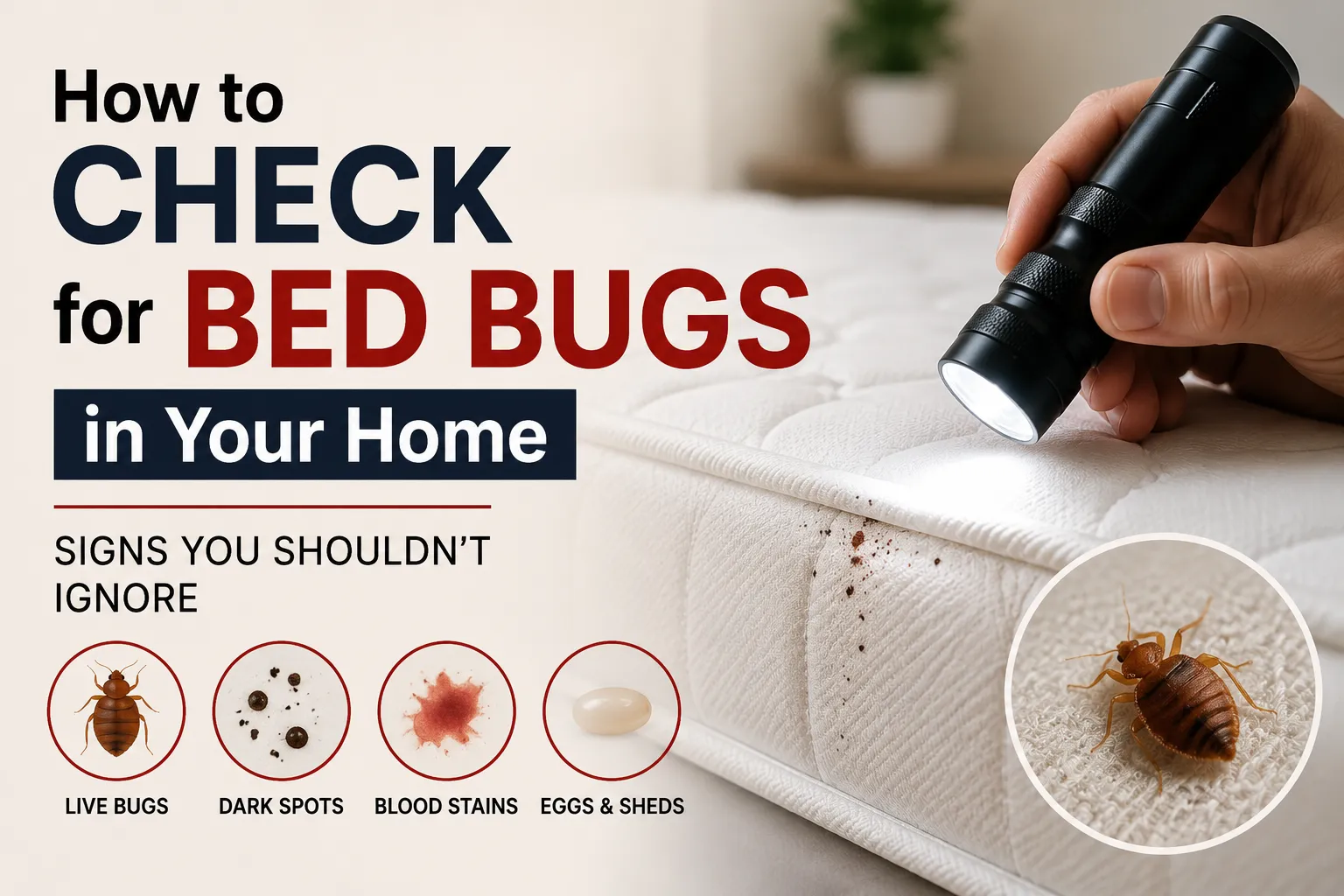
Tiny blood spots on sheets, pillowcases, or mattresses can occur when bed bugs are accidentally crushed during sleep.
While occasional stains may have other causes, repeated spotting should raise concern.
Dark Fecal Spots
Bed bugs leave behind small black or brown spots that resemble ink marks.
Check:
- Mattress seams
- Bed frames
- Headboards
- Upholstered furniture
These spots are often one of the clearest signs of an active infestation.
Shed Skins and Eggs
As bed bugs grow, they shed their outer skin.
Look for:
- Pale yellow skins
- Tiny white eggs
- Eggshells near hiding spots
Finding these is a strong indication that bed bugs are reproducing nearby.
Where to Check for Bed Bugs?
Inspect Your Mattress
The mattress is usually the first place to investigate.
Pay close attention to:
- Mattress seams
- Piping edges
- Tags and labels
- Mattress folds
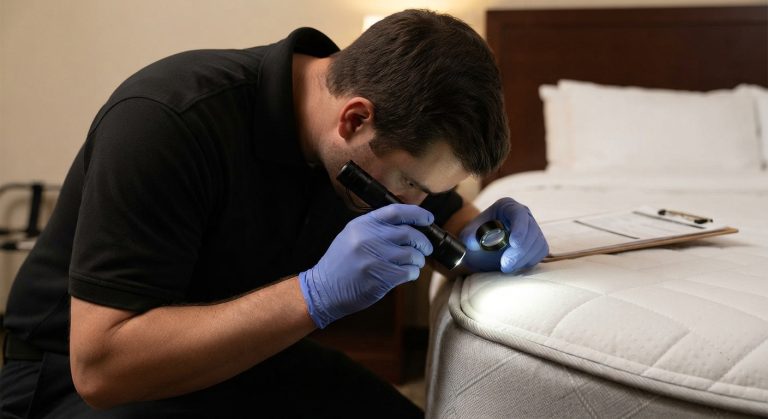
Use a flashlight to inspect every corner carefully.
Examine the Bed Frame
Bed bugs frequently hide inside cracks and joints of bed frames.
Check:
- Screw holes
- Wooden joints
- Metal frame openings
- Headboard attachments
Even small gaps can provide ideal hiding spots.
Check Behind the Headboard
Many homeowners overlook the headboard during inspections.
Remove or pull it away from the wall and inspect:
- Back surfaces
- Mounting brackets
- Wall connections
This area often provides dark, undisturbed shelter for bed bugs.
Look Around Furniture
Bed bugs don’t limit themselves to beds.
Inspect nearby:
- Sofas
- Recliners
- Nightstands
- Dressers
- Upholstered chairs
Pay special attention to seams, folds, and hidden corners.
Inspect Curtains and Carpets
In larger infestations, bed bugs may spread to nearby fabrics.
Check:
- Curtain folds
- Carpet edges
- Baseboards
- Floor cracks
Use a flashlight to examine dark areas thoroughly.
How to Perform a Proper Inspection?
For a more effective inspection:
- Use a bright flashlight.
- Wear disposable gloves.
- Check slowly and methodically.
- Take photographs of suspicious findings.
- Use a magnifying glass if necessary.
Patience is important because bed bugs are skilled at hiding in very small spaces.
Common Places People Forget to Check
Many infestations continue because homeowners miss less obvious hiding spots.
Don’t forget to inspect:
- Electrical outlets
- Picture frames
- Luggage
- Bookshelves
- Behind loose wallpaper
- Pet bedding
Bed bugs can travel surprisingly far from the original infestation source.
What to Do If You Find Bed Bugs?
If you discover evidence of bed bugs:
- Wash bedding in hot water.
- Vacuum affected areas thoroughly.
- Reduce clutter around sleeping areas.
- Seal infested items when possible.
- Avoid moving furniture between rooms.
Moving infested items can spread bed bugs throughout the house.
When to Call Professionals?
Bed bugs are notoriously difficult to eliminate completely without professional treatment. Their ability to hide in tiny spaces and survive for extended periods without feeding makes DIY treatments unreliable in many cases.
If you’ve confirmed bed bug activity, professional bedbug pest control services can provide targeted treatment plans designed to eliminate infestations at every stage of their life cycle.
Many homeowners searching for “Pest Control Near Me” only do so after an infestation becomes severe. Acting early often results in faster treatment and lower overall costs.
Protect Your Home From Bed Bugs
Early detection remains the most effective defense against bed bugs. Regular inspections, especially after travel or purchasing second-hand furniture, can help prevent infestations from becoming established.
By knowing where to look and what signs to watch for, you can identify bed bugs quickly and take action before they spread. Whether you choose preventative measures or professional pest control services, staying proactive is the key to maintaining a healthy, pest-free home.